
Why Did Sparta Really Collapse? (Not War)
The short answer
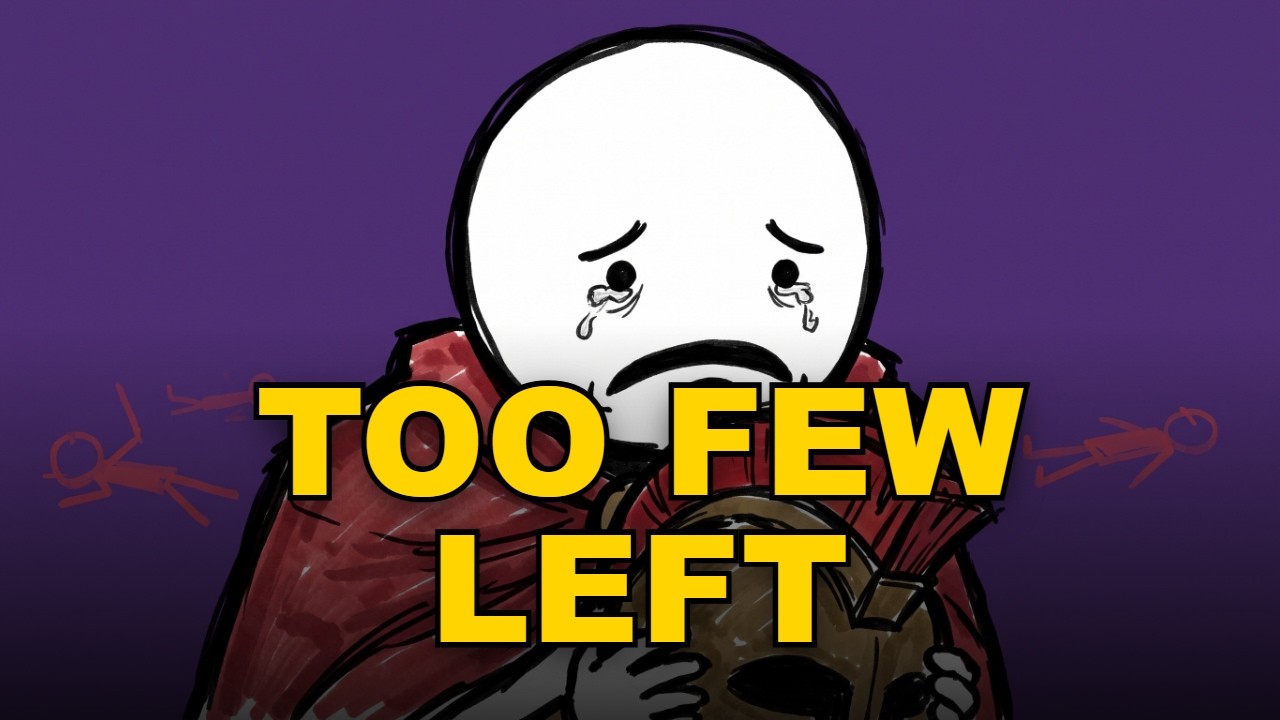
The Spartans were the most feared warriors who ever lived — so why did Sparta collapse so completely that, centuries later, tourists paid to watch its rituals like a theme park? This is the real story of Sparta: a superpower built on the backs of enslaved helots that didn't fall to a stronger enemy. It simply ran out of Spartans.
The story
Sparta explained: how a handful of villages in Laconia rose to rule Greece, how the agoge and the secret-police krypteia held a slave society together through fear, the truth about the 300 at Thermopylae (they were the elite core of a roughly 7,000-strong Greek force), how Sparta beat Athens in the Peloponnesian War using Persian gold, and how the Battle of Leuctra in 371 BC and the freeing of the Messenian helots ended Spartan power forever. This is the rise and fall of Sparta — the Spartan warriors, Spartan women, oliganthropia, and what really caused Sparta's decline. A military history of ancient Greece: the Spartan army and the agoge that forged it, the war with Athens, and the Battle of Leuctra that broke Spartan power in one afternoon.
Chapters
Sources
Every claim in this episode is checked against these sources before publishing.
- Sparta — World History Encyclopedia
- Battle of Leuctra — World History Encyclopedia
- Spartan Women — World History Encyclopedia
- Peloponnesian War — World History Encyclopedia
- Spartan Oliganthropia (Timothy Doran, Brill)
- Sparta's Self-inflicted Wound — Engelsberg Ideas
- Was the Krypteia Sparta's Secret Police? — Bad Ancient
Full transcript
Read the full narration (1,931 words)
You've probably used the word today without thinking. Spartan. A bare room. A brutal workout. A life stripped down to nothing but discipline. We borrowed that word from one real
city, the most feared warriors who ever lived.
But here's the part nobody tells you. That city wasn't crushed by a bigger empire. It quietly ran out of Spartans. Roughly eight thousand citizens, dwindling to barely a thousand, until a single afternoon killed almost everyone it had left. This is how the toughest society in history deleted
itself. And here is what I think really matters about this story. Sparta was never truly beaten by an enemy. It was too afraid of change to survive
itself. So how does a state built entirely for war bleed itself to death? Hold that question.
Because the answer is stranger than the movies ever told you.
To understand the afternoon Sparta ended, we have to rewind almost four hundred years, to the day it decided to enslave its neighbours. Go back to the tenth century BC.
A handful of villages in a valley in southern Greece join together. They call the place Sparta. And right away, they do something
no other Greek city dares. They refuse to build a wall. Their walls, they boast, are their men. For a while, Sparta is just another town.
Then it gets hungry. Next door lies Messenia, a region of rich farmland. Sparta invades. It takes decades and two brutal wars.
But in the end, Sparta wins. And here is the choice that makes everything else.
Sparta does not just take the land. It takes the people.
It turns an entire neighbouring nation into slaves.
They are called helots. They farm the fields. They do every ounce of the labour. And they vastly outnumber their masters.
That is the deal at the heart of Sparta. The helots work, so that Spartans
never have to. A whole population is enslaved, so that a small
elite can train for war and nothing else. Every noble thing you have ever heard about Sparta sits on top of that one fact.
Now here is the part nobody tells you. The famous Spartan discipline was not really about glory. It was about fear. When you enslave far more people than you have citizens, you live every day terrified they will rise up and kill you. So the Spartans built a machine to keep
that from happening. And it was monstrous. It started with the children. From the age of seven, a Spartan boy was taken from his mother.
He was handed to the state. He grew up in communal barracks, half-starved on purpose, beaten, and taught to fight. This upbringing was called the agoge, and it lasted until he was
about thirty. They kept the men equal on purpose. Full citizens called themselves the homoioi. The Equals. The system was designed to erase any visible difference
of wealth between them. According to tradition, a lawgiver named Lycurgus set all of this down, though he may be half-legend, a man we can barely prove existed. Sparta was even said to
have banned gold and silver. The story goes that they used clumsy iron bars for money, so heavy and worthless that no one could hoard them. It is a great story. Many historians now think it is mostly a later myth. But the idea it sold was pure Sparta.
No private riches. No greed. Only the state.
Their politics were strange too. Sparta had two kings at once, from two royal families, so neither could ever become a tyrant.
When the assembly voted, they did not count hands. They shouted. Whichever side roared louder simply won, judged by ear.
And the women. Spartan women had freedoms unheard of anywhere else in Greece. They could own land. They could inherit. They were educated. Girls trained and raced in public, because strong mothers,
the theory went, made strong warrior sons. When an outsider asked Queen Gorgo why Spartan women alone seemed to rule their men, she reportedly answered, because we are the only women who give birth to real men.
But remember what all of this was for. Keeping the slaves down.
So Sparta invented the krypteia. Young Spartans were sent out into the countryside with daggers. They spied on the helots. And any helot who seemed too strong, too clever, too dangerous, they killed in secret. And it gets darker.
Every single year, Sparta's leaders formally declared war on their own enslaved population. Aristotle reports it, through the later
writer Plutarch. Why declare war on people you already own? So that murdering one of them would count as an act of war, not a crime.
No guilt. No religious stain. Just routine, organised terror. That was the real Sparta. Not a noble brotherhood.
A tiny armed elite, sitting on a vast enslaved majority, holding them down with knives in the dark. Keep that machine in your head.
Because now we get to the moment it looked, briefly, unbeatable.
The year is four hundred eighty BC. A massive Persian army pours into Greece, led by King Xerxes. Not the millions the old storytellers claimed, but tens of thousands. More than enough to swallow Greece whole.
And a Spartan king named Leonidas marches out to meet them at a narrow pass
called Thermopylae. You know the number.
Three hundred Spartans. And here is the truth about the three hundred. They were never alone. Leonidas anchored a combined Greek force of roughly seven thousand men. The three hundred were the elite core, not
the whole army. For three days they hold the pass.
Then a local man named Ephialtes betrays them. He shows the Persians a hidden mountain path, and the enemy pours around behind.
Leonidas sends most of the army away. And he stays to die.
But not only Spartans stayed. About seven hundred men from a city called Thespiae chose to stand and die beside them.
Seven hundred ordinary Greeks, written almost completely out of the legend. The three hundred are famous. The Thespians are forgotten.
They deserved better. The next year, Sparta gets its revenge. At Plataea, it fields its largest army ever, and the Greeks shatter the
Persian land force. By one ancient account, from Herodotus, every Spartan soldier was attended by seven helots on that field. Modern historians doubt the exact number. But it tells you everything.
Even at Sparta's greatest victory, the slaves vastly outnumbered the free.
Then comes the long war against Athens. Sparta was a land power, a nation of farmer-soldiers. Athens ruled the sea. For years, Sparta simply could not win. So it did the most un-Spartan thing imaginable.
It took Persian gold, the money of its old enemy, and built a fleet. The admiral Lysander used that fleet to destroy the Athenian navy at Aegospotami, and starved Athens into surrender. So the incorruptible city, the one that
supposedly banned gold, won its greatest war with foreign gold. Sparta was now the master of Greece. And it had never been weaker.
Because underneath the victories, something had been quietly going wrong for generations. Aristotle gave it a name. Oliganthropia. A shortage of men. The number of full Spartan citizens was collapsing.
And here is the cruel twist. They were not mostly dying in battle. They were vanishing through their own rules. Land kept concentrating into fewer
and fewer hands, passed down through inheritance and through wealthy heiresses.
By Aristotle's account, women eventually owned nearly two-fifths
of all the land in Sparta. And here was the trap. To be a full Spartan, you had to contribute food to the communal mess hall from your own land. Lose your land, and you lost your citizenship.
So as farms piled up with the rich, more and more men dropped out of the Equals forever.
And Sparta, rigid to the bone, refused to make new citizens to replace
them. Think about what that means. The most militarised society in history was running out of soldiers. Not from war. From arithmetic.
Around eight thousand citizens in the early years. By the time of Leuctra, barely a thousand. A war machine slowly starving itself of the one thing it could not buy. Men. Which brings us back to that summer
afternoon in three hundred seventy-one BC. At Leuctra, a Theban general named Epaminondas does something nobody expects.
Greek armies normally put their strongest troops on the right and clashed
evenly. Epaminondas throws the rulebook away.
He stacks his left wing dozens of shields deep, an unstoppable hammer, and he leads with an elite unit called the Sacred Band.
He aims that hammer straight at the Spartan right. Exactly where the king and the very best Spartans stand. The two lines meet. And the invincible phalanx simply breaks. King Cleombrotus is killed.
About four hundred of the roughly seven hundred Spartan citizens on that field die with him. For any other city, four hundred dead is a wound. For Sparta, with barely a thousand citizens left in the whole world, it
is a death sentence. They cannot be replaced. There is no one left to replace them. Two centuries of supremacy, ended in a single afternoon.
That is the answer to the question we opened with. The undefeatable were not beaten by a better army. They were beaten because there were almost none of them
left to lose. And then comes the blow that finishes them. In three hundred sixty-nine BC, the Thebans march right into Sparta's
homeland. And Epaminondas does the one thing Sparta feared above all else, for four hundred years. He frees the helots. He founds a free city for them, called Messene, on the very land Sparta
had stolen. And with that, the whole logic of Sparta collapses.
No helots means no one to farm. No farmers means the citizens can no
longer be full-time warriors. The machine that turned children into soldiers
only worked because slaves grew the food. Cut that root, and the entire tree falls. Sparta never recovered.
It shrank into a minor town. Under Rome, it became something almost unbearable
to imagine. A tourist attraction. Visitors paid to watch Spartan boys
flogged at an altar, in staged rituals, a theme-park version of the terror
that had once been real. And that is the final irony.
We remember Sparta from the outside, through admirers and myth-makers.
The Spartans themselves left almost nothing. No great buildings. No poetry. No philosophy.
The historian Thucydides guessed that if Sparta were ever deserted, no one would believe it had been so powerful, because there would be nothing left to show for it.
So the three hundred were seven thousand. The noble equals ran a slave state held together by murder. The incorruptible city won its war with an enemy's gold. And the unbeatable warriors were
destroyed, in the end, not by a stronger foe, but by their own refusal to change. For me, that is the part that lingers.
The scariest thing about Sparta is that no enemy ever had to beat it. Sparta spent everything on war and nothing on the future.
It would not share citizenship. It would not adapt. And a state that will not adapt does not get conquered.
It simply runs out. That is what Sparta really teaches. Not how to win. How a society can quietly delete itself, one rule at
a time. If this rewrote the Sparta in your head, stick around. Next time, we take on another empire that thought it would last forever. Follow along, and let's find out how that one really ended.
Enjoyed this? Subscribe on YouTube — a new episode every Thursday.