
Was Dracula Real?
The short answer
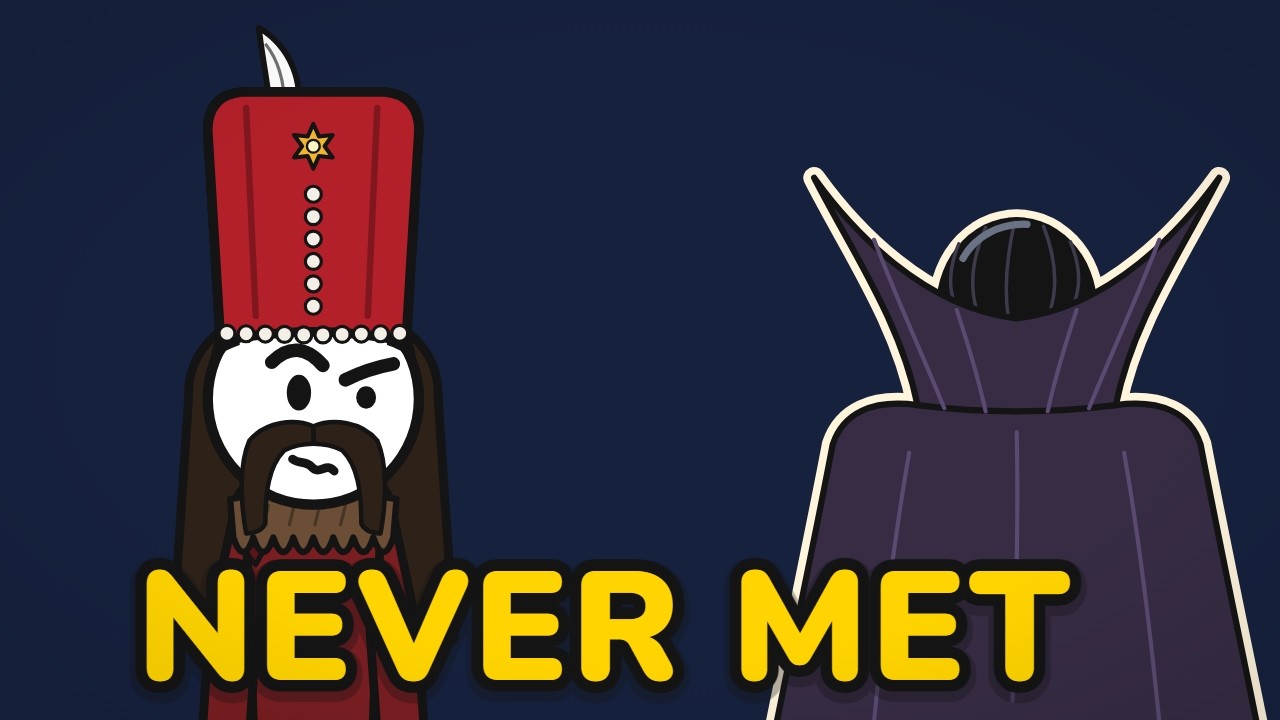
Dracula was a real prince who used the name himself, but in Bram Stoker's first notes the vampire was called Count Wampyr. The monster you know was assembled from three true stories that never met: a 15th-century prince at war with the Ottomans, a panic over dead villagers dug up by army surgeons, and one Victorian notebook. So was Dracula real, and who finally welded the prince to the vampire?
The story
Was Dracula real? Vlad III of Wallachia, known as Vlad the Impaler, was the son of Vlad Dracul of the Order of the Dragon. We follow the real prince from the Ottoman sultan's court and the night attack near Targoviste in 1462 to the German pamphlets that made him a monster in print, and the empty slab at Snagov. Then where the West's vampire came from: the Habsburg reports from Serbian villages in 1725 and 1732, the second of which brought the word vampire into English. Then Bram Stoker's notes, the 1820 book he read in Whitby, and how the Impaler was linked to Count Dracula only in the 1950s to 1970s, through Bran Castle ('Dracula's Castle') and the book In Search of Dracula. Medieval history, the Ottoman wars, folklore and the history of a legend, and how the film Nosferatu (1922) gave vampires the sunlight rule.
Chapters
Sources
Every claim in this episode is checked against these sources before publishing.
- Elizabeth Miller, 'The Question of Immortality: Vampires, Count Dracula, and Vlad the Impaler', Journal of Dracula Studies 4 (2002)
- David B. Dickens & Elizabeth Miller, 'Michel Beheim, German Meistergesang, and Dracula', Journal of Dracula Studies 5 (2003)
- Constantin Rezachevici, 'The Tomb of Vlad Tepes: The Most Probable Hypothesis', Journal of Dracula Studies 4 (2002)
- William Wilkinson, An Account of the Principalities of Wallachia and Moldavia (1820), scan
- Rosenbach Museum & Library — Bram Stoker's Notes for Dracula
- Online Etymology Dictionary — 'vampire'
- Mike Jay, 'Demand Stolen Rings', London Review of Books (2026)
- Pittala et al., 'Count Dracula Resurrected: Proteomic Analysis of Vlad III the Impaler's Documents', Analytical Chemistry (2023)
- Public Books — 'Blood Brothers: Dracula vs. Nosferatu' (2017)
- National Geographic — 'Visit Dracula's Castle in Transylvania' (2018)
Full transcript
Read the full narration (1,885 words)
Dracula was a real prince, who used the name himself. But in Bram Stoker's first notes, the vampire wasn't Dracula at all. He was Count Wampyr. Stoker took the name from a few lines about the prince, in one library book, and that's all he's known to have read about him. The monster you know was assembled from pieces that never met. A prince at war with the Ottomans. A panic over dead villagers, dug
up by army surgeons. And one notebook, where Count Wampyr got crossed out. I expected to debunk Dracula. Instead I found three true stories, stitched together by accident, and I think that's better than any vampire. No source from his own century says the prince drank blood. So how did he become the most famous vampire in the world? Not through the novel. The novel barely knows him.
Someone else joined the prince to the monster, long after the ink was dry, and that is where this story ends. The name Dracula has nothing to do with blood. It means son of the Dragon. Around the year the prince was born, his father joined the Order of the Dragon, a crusading order founded to halt the Ottoman advance. So the father became Dracul, the Dragon, and his son became Dracula. The Dragon's son. But the Dragon's loyalty had to be guaranteed.
So two of his boys were handed to the Ottoman Sultan as hostages. Two brothers at the Sultan's court. As long as they stay, their father stays loyal. The older one is Vlad. The younger one is Radu, a boy people would remember for his looks. Radu the Handsome. They were held for years. Around the time Vlad was released, their father was killed by an enemy army as he retreated toward Bucharest.
So Vlad took his father's throne, lost it within months, and years later took it back. This time he held on. He crossed the Danube to strike Ottoman troops, and that river crossing matters. It is one of only three things about him known to have reached Stoker. The answer came the following summer, from the Sultan who had conquered Constantinople. He invaded Wallachia. A summer night, near the town of Targoviste.
The Sultan's army is camped in the dark, and the camp is quiet. Out of that dark, Vlad's men break into the camp, shouting, hunting for one man. The Sultan. They mean to kill him or take him alive. They fail. The shouting dies away, and the Sultan is still alive. So the Sultan marches on toward Targoviste, and his army comes to a field of stakes, later called the forest of the impaled.
The Ottomans had a name for the man behind it. The Impaler. One Byzantine historian put a number on that field, about twenty thousand people. But he hedged it himself. As it was said. By that historian's account, the Sultan said he could not take the country from a man capable of such things. So the Ottomans withdrew, and left a new prince on the throne. Vlad's brother. Radu the Handsome.
Vlad fled to Hungary, where the King of Hungary had him arrested over letters of treason that most historians believe were forged. He would spend about twelve years a prisoner. And while he sat there, his enemies were already turning him into a monster. A collection of stories about his cruelty was written down the very year he lost his throne. The next winter, a weaver's son turned court poet sang about him
at the Emperor's court, in a song more than a thousand lines long. Its title was Story of a Bloodthirsty Madman Called Dracula of Wallachia. A generation later, the printing press found him. Printers in Nuremberg, Bamberg, Strasbourg and other cities turned out more than a dozen editions of pamphlets about Prince Dracula, with woodcuts. Those stories were useful to someone.
The King of Hungary needed to justify locking him up. And the Saxon merchant towns, which had clashed with him over taxes, supplied the accusations. He did get out, and he took his throne back one last time. Within weeks he was dead, killed in fighting near Bucharest. His head was sent to Constantinople. Where he is buried, nobody knows. A tradition that first appears on paper almost four centuries later pointed
to a stone slab at Snagov monastery. When an archaeologist finally dug beneath it, he wrote that there was no tomb. Only many bones and jaws of horses. So, plenty of cruelty, in songs and in print, and no sign that Stoker ever read a word of it. But not a single vampire. The vampire the West would know was being born somewhere else, two and a half centuries later, in a pile of army paperwork.
Every time you say the word vampire, you are echoing a newspaper from seventeen thirty-two. That is the year the word reached English, in reprints of Austrian army reports about dead villagers in Serbia. The belief was old Slavic folklore, but Western Europe learned it from paperwork. It started in a Serbian village under Habsburg rule. A peasant died, and nine of his neighbours died after him.
So the village dug him up. The body looked undecayed. In front of an imperial official, they staked it and burned it, and the official's report, printed in a Vienna newspaper, used a local word. Vampir. In another Serbian village, Medveda, a former soldier broke his neck falling from a hay wagon. When more deaths followed, his neighbours dug him up too.
And when the deaths kept coming, the army sent surgeons. It is January, seventeen thirty-two, the middle of winter. Grave after grave is opened, while an army surgeon writes down what he sees. He calls his report Seen and Discovered. Printed in Nuremberg, the report spread through German newspapers all the way to London. One London paper wrote of dead bodies, called there
vampyres. It placed the village in Hungary. So what were the surgeons really seeing? Bodies doing what bodies do. As they decompose, they bloat, they turn ruddy, and blood can seep from the mouth. The vampire of the old reports was no pale count. As one folklorist found, it was usually a ruddy, bloated, lightly bearded peasant. Within a generation, the Empress's own physician reported
that vampires do not exist. But the word was already loose. So now there were two stories, from two different centuries. A cruel prince called Dracula. And a monster called the vampire, born in a village grave. Nothing tied them together, until a theatre manager in London started a notebook. The man who wrote Dracula never set foot in Transylvania. Bram Stoker managed the Lyceum Theatre in London, and wrote in whatever time
the job left him. For seven years, he gathered notes for one book. In the early notes, according to scholars who have studied them, the story was set in Styria, in Austria, and the vampire was Count Wampyr. Summer, eighteen ninety. The library in Whitby. The only sound is pages turning. Stoker is reading an old book by a former British consul in Wallachia. On one page, a prince also named
Dracula crosses the Danube to attack the Turks. And at the bottom of that page, a footnote. Dracula, in the Wallachian language, means Devil. His pen scratches the footnote into his notes. And again, in capitals. Count Wampyr gets a line through his name, and the vampire has a new one. Devil was a later reading. The name meant son of the Dragon. For Stoker, the footnote was enough. That page gave Stoker three things.
A name. A raid across the Danube. And a brother who went over to the Turks. All three are in the novel. The Count boasts of a Dracula who crossed the Danube and beat the Turk on his own ground. He laments an unworthy brother who sold his people to the Turk. The real brother behind that line was Radu, the handsome hostage. What the page never mentions is impaling. The scholar who co-edited Stoker's notes found not the slightest bit of evidence
that he knew about any of it. His Transylvania came from travel books, and from an essay by a Scottish woman who had followed her husband's army postings there. It gave English, and Stoker, the word nosferatu. The book came out in eighteen ninety-seven. Its Icelandic edition would even carry a preface insisting the events really took place. So Stoker borrowed a name, a raid and a brother.
Not the man. Which means someone else turned the Impaler into the Count. The question is who. The idea that Stoker's Count was really the Impaler first shows up in the nineteen fifties, in the work of one scholar, more than half a century after the novel. In the nineteen sixties, Romania's communist tourism officials picked Bran Castle to sell as Dracula's Castle, because, as one account puts it, it
looked sufficiently Gothic. Vlad may have spent a night or two there. Bran is still sold to tourists that way today. And in nineteen seventy-two, two historians published a book called In Search of Dracula. It made the prince famous around the world, as the man behind the Count. That is where the prince and the vampire were finally welded together. Not in Stoker's notebook. In a history book and a tourist label, long after
Stoker was gone. At almost the same moment, Stoker's own notes were rediscovered. They told a much smaller story. A name, copied twice. Nothing about stakes. Even the two historians later stepped back from the claim that Vlad was Stoker's model. At home in Romania, he had long been something else entirely. A national hero. That same decade, the state marked
five hundred years since his death with statues, renamed streets and a stamp. And the blood? No source from his own century says he drank any. One version of that story traces back to a magazine interview from the nineteen sixties, with a man claiming to be Vlad's descendant. When chemists recently tested letters Vlad signed, the proteins they found hinted at something else. He may have wept tears of blood. May.
Other hands touched those letters too. Even the rule nearly every vampire film still follows, that sunlight destroys them, is not Stoker's. His Count is beaten by a group of men. Death by sunlight came from Nosferatu, an unauthorised German film from nineteen twenty-two. Stoker had died ten years earlier. His widow sued, and German courts ordered every copy destroyed. But so many prints were already out there that the film survived.
And so did its rule. So, was Dracula real? Three times over. The name was a real prince's. The vampire was a real villager's grave. The Count was a real notebook, with Wampyr crossed out. None of the three was a vampire. A monster this famous never had a single author. It was borrowed into being, one piece at a time. I came to debunk a monster
and found three true stories instead. I'll take those over the vampire. Dracula was a real prince, who used the name himself. He just never met the vampire. Some legends survive a close look. Most don't. Subscribe, and you'll see which ones do.
Enjoyed this? Subscribe on YouTube or binge the whole Great Empires series — a new episode every Thursday.